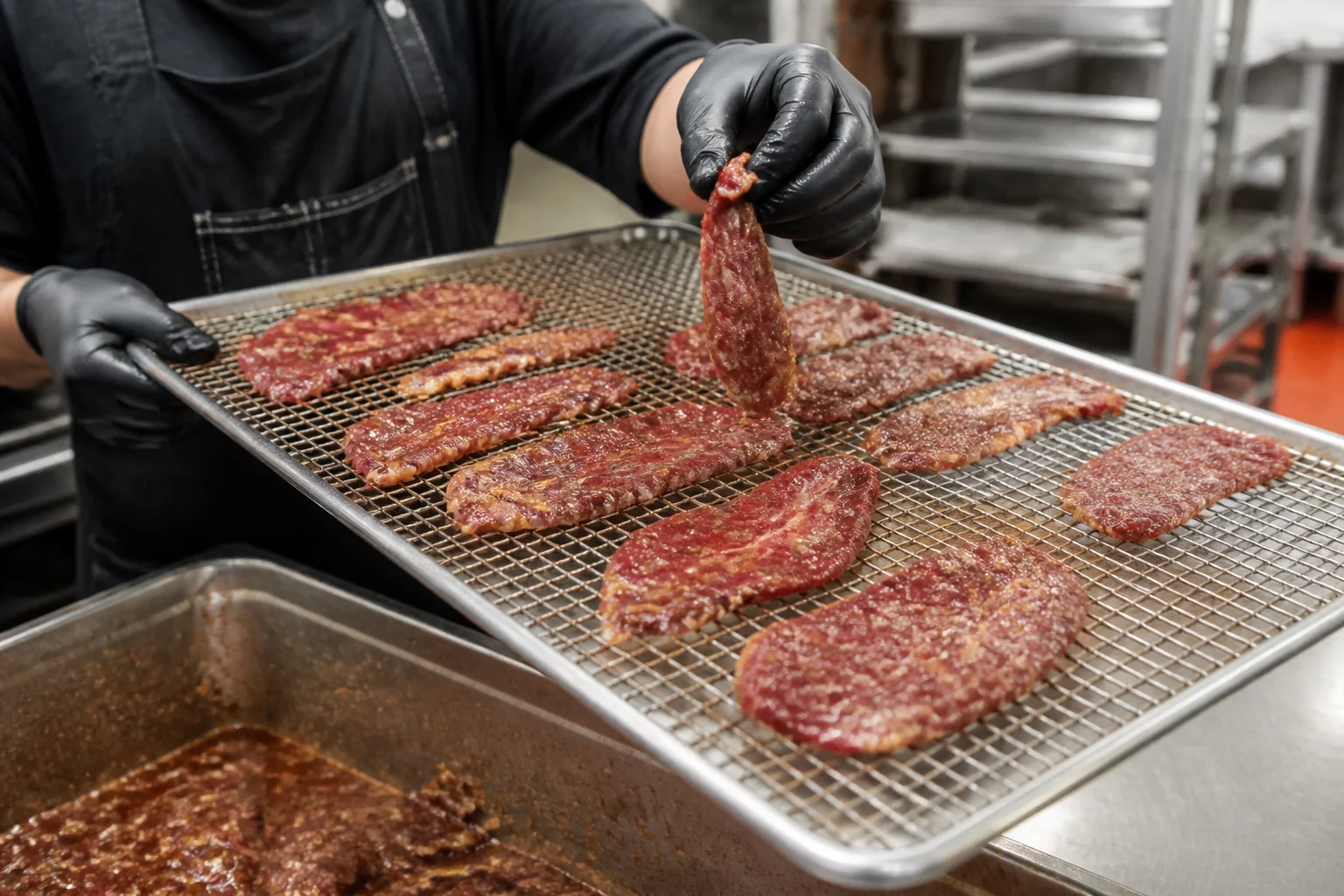
Artisan beef jerky is made by trimming premium lean beef, slicing it with precision across the grain, soaking the meat in a balanced spice marinade, and dehydrating it slowly with hardwood smoke to remove moisture while concentrating rich savory flavor.
The Anatomy of Premium Beef Cuts
The foundation of top-tier jerky begins with the butcher's table. Fat does not dry properly and spoils quickly, which means artisans avoid heavily marbled steaks in favor of ultra-lean whole-muscle cuts. Eye of round, top round, and bottom round represent the industry standard because of their dense fiber structure and minimal intramuscular marbling.
Butchers hand-trim every strip to remove outer fat caps, silver skin, and connective tissue. Slicing with the grain produces a traditional chew that lasts longer, while cutting across the grain yields a tender, easy-bite texture preferred in modern craft recipes.
Jerky making is not about rushing the heat. It is an exercise in steady airflow, disciplined moisture removal, and allowing hardwood smoke to season the meat right to the core.
The 4 Key Stages of the Production Process
Every batch of jerky at Trip Jerky follows four fundamental production milestones to guarantee food safety and unmatched depth of flavor:
- Precision Slicing & Portioning: Chilling meat down to near-freezing temperatures permits ultra-consistent 4mm to 5mm uniform cuts.
- Deep Spice Marination: Meat strips submerge for 24 to 48 hours in cold marinades packed with soy sauce, Worcestershire, cracked peppercorns, garlic, and sea salt.
- Even Rack Laying: Meat strips get spaced individually on stainless food-grade racks to ensure uninterrupted convective air circulation.
- Controlled Smoke & Dehydration: Low-temperature drying between 65°C and 75°C gently pulls water out while infusing pure hickory and maple aroma.
Why Low and Slow Thermal Drying Matters
Cooking meat at high heat turns jerky into brittle, burnt crisps. Authentic dehydration uses controlled humidity chambers where temperature rises gradually to safely destroy bacteria without boiling the meat juices. The moisture level drops by approximately 60% of original fresh weight, resulting in an exceptionally protein-dense snack that remains shelf-stable for months.
Craft Jerky Pro Tip
To check if jerky is perfectly dried, bend a strip gently: it should crack and show white fiber strands without snapping in half completely.
Once dehydration finishes, the jerky rests at ambient room temperature before oxygen-sealed packaging locks in fresh smokehouse aroma until opened.
Community Discussion
2 InsightsVery informative process.
Very informative process. The breakdown of meat cuts and drying temperatures explains exactly why commercial jerky differs so much from craft recipes.
Alice
ReaderLoved learning about this. The pro tip on bending the strip to check the white fibers was something I never knew before!
Chef Bob
Verified Reader