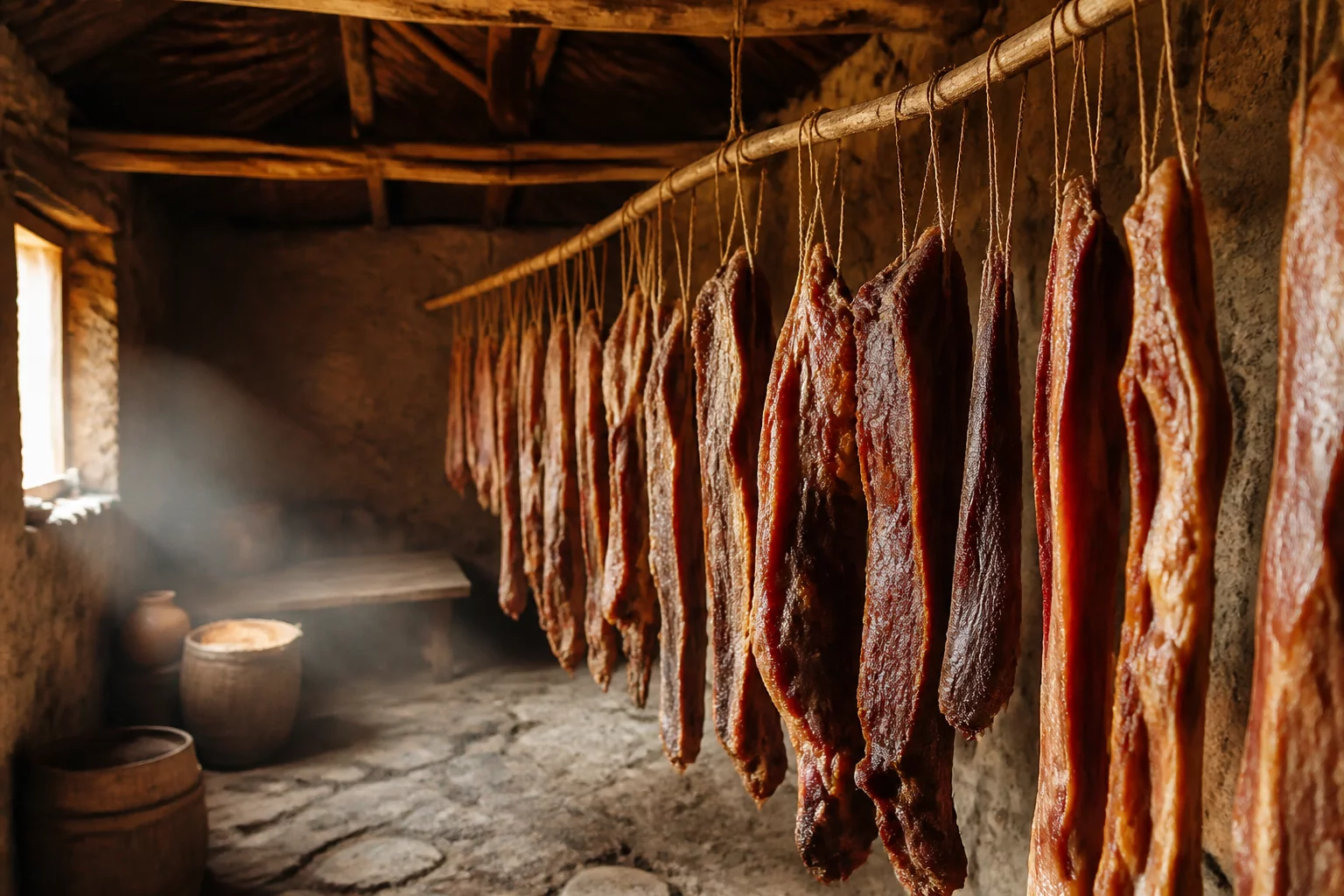
Long before mechanical refrigeration or vacuum sealers existed, ancient civilizations mastered the essential craft of curing meat with salt, smoke, and sun. Dried meat fueled nomadic tribes, imperial legions, and frontier explorers across centuries, eventually evolving into the rich, artisanal beef jerky we crave today.
Ancient Origins: The Incan Ch'arki and Roman Coctio
Preserving meat through moisture removal is one of humanity's earliest survival innovations. In the high altitudes of the Andes mountains, the Quechua people developed 'ch'arki'—the linguistic predecessor of our modern word jerky. Andean hunters sliced sun-dried llama and alpaca meat thin, pounded it flat with stone implements, and let the crisp nocturnal mountain air freeze-dry it after hot desert sun exposure.
Across the Mediterranean, Roman legions carried bucellatum and dried pork seasoned with coarse sea salt and Mediterranean bay leaves on military campaigns stretching thousands of leagues. In North America, Indigenous nations created pemmican by pounding dried lean bison meat together with rendered suet and tart Saskatoon berries, producing a dense nutritional ration that remained edible for years without spoiling.
Without dried meat, humanity could never have crossed vast oceans, traversed mountain ranges, or survived brutal winters. It is the food that built civilizations.
Pioneer Trails and the Smokehouse Revolution
As trade routes expanded throughout the 18th and 19th centuries, European settlers adopted indigenous drying techniques and combined them with traditional hardwood smokehouses. Smoking meat over oak, hickory, and fruitwood added phenolic compounds that deterred bacteria while infusing unforgettable rustic flavors into every strip.
- Natural preservation: Salt draws out moisture, preventing bacterial growth without chemical preservatives.
- Smoked curing: Wood smoke imparts phenolic antioxidants and deep amber coloring to whole muscle cuts.
- Trail mobility: Dried meat provided high protein and iron per ounce, ideal for prospectors and voyagers.
- Regional seasonings: Pioneers incorporated coarse black pepper, brown sugar, cider vinegar, and dried herbs.
From Mass Production Back to Craft Artistry
The late twentieth century saw beef jerky enter convenience stores as an ultra-processed, sugary snack. However, the last decade sparked a craft jerky renaissance. Discerning consumers returned to traditional methods: 100% whole muscle Canadian beef, authentic wood smoke, reduced sodium nitrates, and intricate spice marinades featuring habanero, whiskey glaze, garlic herbs, and maple.
Craft Jerky Pro Tip
Traditional drying requires consistent airflow and low ambient heat between 65°C and 75°C (150°F–165°F). Rushing the drying process creates a brittle shell with a moist interior, while slow dehydration yields the perfect chewy, pliable texture.
Today, opening a bag of craft jerky connects us to thousands of years of human ingenuity. Each chew delivers the same rugged satisfaction that sustained ancient hunters and adventurous pioneers across untouched wilderness.
Community Discussion
1 InsightsFascinating historical overview!
Fascinating read.
History Buff
Verified Reader